


The Church of England's Glass Ceiling Finally Shatters: A Woman at the Altar.
- gracemcloughlin15
- Jan 9
- 4 min read


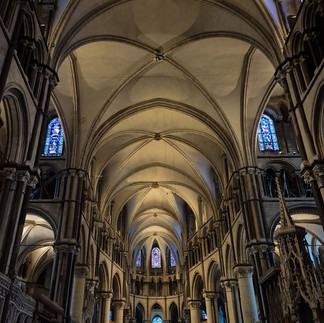


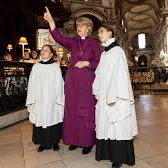
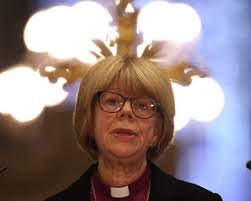
Historic and quietly radical, an institution steeped in ritual, authority and male lineage has found power in the voice of Dame Sarah Mullally. Five hundred years of misogynistic inequality cracked like glass: in the stillness of Canterbury Cathedral, a woman in white robes took the pulpit and centuries of silence shifted. Sarah Mullally, sixty-three, has become the one hundredth and sixth Archbishop of Canterbury and the first woman to lead the Church of England, since its founding in fifteen thirty-four.
Her first act was not to assert authority, but to extend protection. Irish-born and once an NHS nurse, Mullaly's voice is rooted empathy. In her inaugural speech, she spoke of "safeguarding" young people in the parish, of care as both duty and doctrine: her faith, like her earlier career, has been shaped by tending and listening. In a time when fewer Britons intify as Christian, the appointment feels less like the Church reclaiming influence and more like rediscovering its empathy. Amongst the historic citadel of male theology, a woman not only inherits the Church, but guides it.
From Silence to Sermon
This appointment matters because the Church's story is also Britain's history. It has taken nearly five centuries for the Church of England to reach this point. Almost three decades ago, in nineteen ninety-four, the first female priest was ordained, and just over ten years since the first female bishop was appointed in twenty fourteen. Each milestone was met with both celebration and outrage, every victory shadowed progression with debate.
However, this Archbishopric is immense symbolism towards evolution. The Church depends on women's invisible labour, through running Sunday schools, raising funds or caring
for the congregations sick and elderly. This archbishopric will credit women for their moral work meaning they will not only be allowed to nurture faith, but to define it. To see a woman stand in the highest clerical office means quiet work becomes visible and not restricted to a man's domain.
The Feminist Language of Care
In patriarchal institutions, empathy has often been treated as the opposite of power- but
what happens if this feminine fragility becomes the highest form of it in ethical force? Feminist thinkers have long reclaimed empathy as power- Bell Hooks called love "a practice of freedom"- a radical act of connection in a divided world. For centuries, the Church sanctified detachment, and priests were called to serve, not to feel. In Mullally's hands, feminists hope to reclaim empathy as spiritual intelligence and a theology of attention.
Before she wore robes, she wore scrubs for over thirty-five years. Her earlier years as a nurse provided her with the foundational grounds of compassion, and now the grounds of Canterbury Cathedral can be rooted in realism: care not as a sentiment, but as a structure. Her leadership style seems to carry attentive logic. When she speaks about faith, she sounds like a person wanting to listen to the voiceless.
According to an article by BBC New on the third of October, perhaps the most urgent issue in her in-tray is still to chart a better path towards dealing with abuse and treating with more compassion those affected by it.
A small encounter; a larger shift. A few weeks ago, while working at TGJones, I served an older gentleman who was excited by the fact that she was "a nurse who went to public school". He recognised her "empathy" as a skill: a discipline of understanding, a method of leadership. His opinion resonated with a cultural shift, mirroring the current process of learning to value traits once dismissed as feminine.
This appointment lands amid national securalisation. Church attendance has fallen sharply in the last twenty years, and faith has been reframed as private. But Sarah Mullally appears to believe that this very quality, once dismissed as feminine softness, could be what reawakens the moral heart of a weary nation.


The Cracks in the Ceiling
To call this a victory would be correct but incomplete. Representation is not revolution and glass ceilings do not shatter quietly. The Church stays institutionally patriarchal; its foundations were built by men for men, hymns carry centuries of gendered language, and its power still hinges on hierarchy. Progress, especially in sacred spaces, is rarely clean. For every headline celebrating her appointment, there are sermons condemning it. Voices of resistance battle voices of renewal.
Conservative choices within the Anglican Communion have condemned it, particularly her support for same-sex marriage. The Global Fellowship of Confessing Anglicans, which stands for conservative views, has criticised the appointment, saying that although some will welcome it, "the majority of the Anglican Communion still believes that the Bible requires a male-only episcopacy".
This appointment reminds us that the feminist struggle is not only about visibility, but about reinterpretation. Her leadership is not a victory for women alone. It is a victory for anyone who believes empathy can coexist with authority, that moral leadership can be compassionate without being fragile.
To live in a secular nation is to be constantly negotiating what belief even means. For many young people, faith is no longer a matter of doctrine but of ethics while searching for meaning in a world defined by crisis. A woman at its helm may not fill the pews but serve as a reminder of why morality matters. Sarah Mullally has a vision of responsibility within her faith amongst a willingness to care for others even when belief feels uncertain.
When The Ceiling Shatters
The Church of England's glass ceiling did not fall with a crash- it fractured slowly over decades.
A woman stands where none stood before her, redefining the Church's possibilities. This reframing feels profoundly feminist. It suggests that power need not dominate to be effective: it can nurture, listen and repair.
Dame Sarah said she realised that "being the first woman is historic, and I often go to schools, and particularly the young women sit up and listen, and they don't want to be the Bishop of London or the Archbishop of Canterbury, but it does allow them to think there are possibilities for them to fulfil their dreams".
The Church, in her image, becomes more of a shelter. In her, empathy has become theology: care has become doctrine: Power has begun to sound like grace- perhaps for the first time.
Comments